
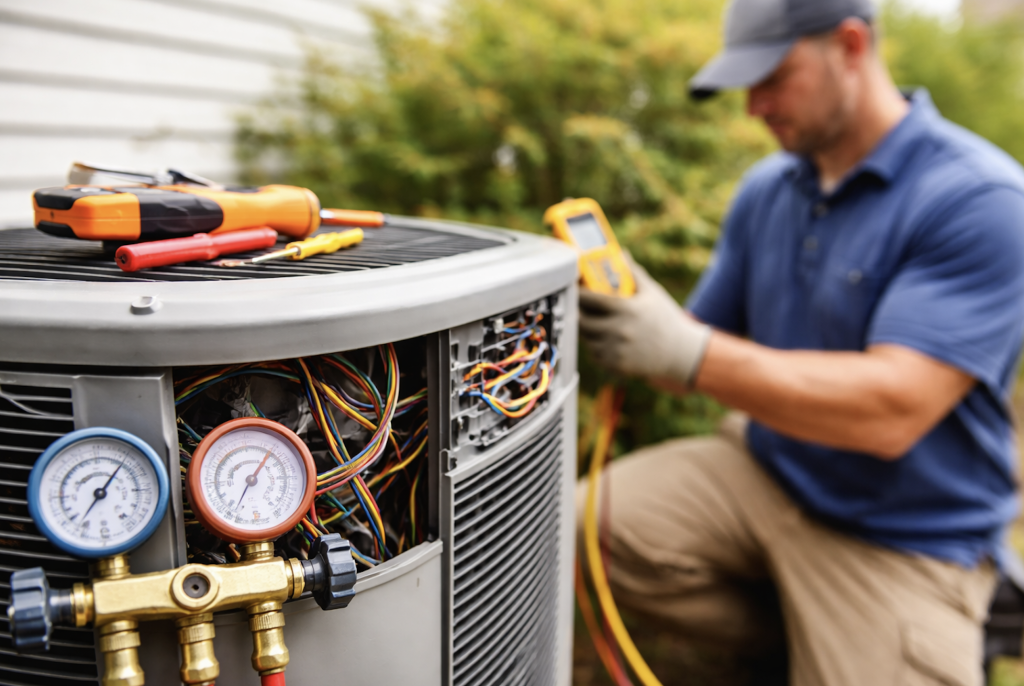
March and April might feel like the calm before the storm in Venice, Florida. The temperatures are pleasant, the humidity has not yet hit its peak, and your air conditioner is probably not running at full capacity. That is exactly why this window matters. The time to find out your AC has a problem is not the first week of June when the heat becomes relentless and every HVAC company in Southwest Florida is fielding emergency calls. It is right now, while you still have time to address issues without urgency and before appointment schedules fill up.
Here is what Venice homeowners should be checking in March and April to make sure their system is ready for the season ahead.
Check and Replace Your Air Filter
This is the simplest thing on the list and one of the most impactful. A clogged or dirty air filter restricts airflow through your system, which forces the equipment to work harder to move conditioned air through your home. Over time, that extra strain reduces efficiency, raises your energy bill, and accelerates wear on components.
In Florida, filters tend to accumulate debris faster than in drier climates because the system runs more often and pulls more air through over the course of a year. If you cannot remember the last time you changed your filter, pull it out and take a look. If it is gray, packed with dust, or visibly restricted, replace it before the heavy cooling season begins. Most standard filters should be changed every one to three months depending on the type and your home’s conditions.
Inspect the Outdoor Condenser Unit
Walk outside and take a look at your condenser, the large unit that sits outside your home. Over the winter and early spring, it is common for debris to accumulate around and inside the unit. Leaves, dirt, grass clippings, and in coastal areas like Venice, salt residue and airborne particles can all affect the condenser’s ability to release heat efficiently.
Make sure there is at least two feet of clearance around the unit on all sides. Clear away any vegetation that has grown up around it. If the fins on the outside of the unit look bent or clogged with debris, that is worth noting for a technician to address during a tune-up. Do not use a pressure washer on the unit yourself, as the fins are delicate and can be damaged easily. A professional cleaning is the right approach if the condenser looks significantly dirty.
Check Your Thermostat Settings and Function
Before the summer season kicks in, test your thermostat to make sure it is communicating properly with your system. Set it to cooling mode and lower the temperature below your current indoor reading. Your system should respond promptly and begin cooling. If there is a delay, if the system short-cycles by turning on and off quickly, or if the temperature in your home does not reflect what the thermostat is set to, those are signs worth investigating before the heat arrives.
If you are still using an older manual thermostat, spring is a good time to consider an upgrade to a programmable or smart thermostat. In a climate where your AC runs as consistently as it does in Venice, the ability to schedule cooling around your daily routine can produce meaningful energy savings over the course of a full summer.
Look for Signs of Moisture or Water Damage Near the Air Handler
Your indoor air handler removes moisture from the air as part of the cooling process, and that moisture exits through the condensate drain line. In Florida’s humid climate, that drain line is under constant pressure and is prone to algae and mold buildup that can cause clogs. When the drain backs up, water has nowhere to go and can overflow into the air handler cabinet, the ceiling, or the floor around the unit.
Check the area around your indoor unit for any signs of water staining, moisture, or active dripping. If you see standing water or significant staining, do not ignore it. A clogged condensate drain is one of the most common HVAC issues in Florida homes and one of the most preventable with routine maintenance.
Listen to Your System Run
Sometimes the most useful diagnostic tool is simply paying attention. Run your system for a full cycle and listen. Rattling, banging, grinding, or high-pitched squealing sounds are not normal and usually indicate something mechanical that needs attention. Weak airflow from vents that used to deliver strong output, warm air when the system is set to cool, or unusual odors when the system first starts up are all worth flagging before summer arrives.
Catching a developing mechanical issue in April is a very different experience from catching it in July. In the slower spring season, repairs can typically be scheduled quickly and completed without the premium pricing and extended wait times that come with peak-season demand.
Schedule a Professional Tune-Up Before the Rush
Walking through this checklist yourself is a good start, but it does not replace a professional inspection. A certified technician can assess refrigerant levels, check electrical connections, evaluate the condition of the compressor and coils, clean components that are not accessible to a homeowner, and identify issues that are not visible or obvious without the right tools and training.
Royal Air Conditioning and Heating is currently offering a spring tune-up special for $99, and spring is the best time to get on the schedule before summer demand makes appointments harder to come by. We have been serving Venice, Nokomis, and surrounding Southwest Florida communities for over 30 years, and we know what Florida’s climate demands from residential HVAC systems.
Contact us today to schedule your pre-season inspection and go into summer knowing your system is read